This blog was originally published here, as part of Twenties Unscripted's Guest Writers Week on July 14, 2014.
Last night, I came across an article about why women should have their vaginas waxed before birthing a baby. After reading the title, I was certain it would be a parody article, a way to explore the many ridiculous ways women are held to ridiculous and brutalizing beauty standards. Much to my chagrin, it was not. This woman really believed waxing your nether regions was a warm-hearted courtesy to the delivering doctor and any onlookers, as well as a “non-negotiable” for all women.
The author compares it to brushing your teeth before seeing the dentist. I’m sure if a bloody, 8 lb. baby were preparing to smash its way out of your body by way of your mouth, it wouldn’t matter if you brushed. It also wouldn’t matter if you had a little mustache hair. Just saying.
For a split second, I did sit here, contemplating my prickly pubes and my long hair with split ends to my scalp and my dirt-encrusted, two-years-unpainted fingernails and my 25-year-old ghost town of a womb—wondering if I really am a woman. A woman wouldn’t wear sandals without a pedicure. A woman doesn’t fart (and laugh about it). A woman would never consider letting a medical professional deliver her baby while there were unsightly scraps of (gasp!) hair around. I’m no expert in childbirth, but I’m pretty sure your pubic hair won’t be a topic of conversation at all—it will probably also be the least gross thing anyone sees that day. It’s pretty unlikely any of your Twitter followers will happen into your delivery room and start a hashtag about #YourDisgustingPubicHair.
This is what I want for women—to consider the bigger picture of all things. Will a freshly-waxed vagina in the delivery room really help you, or the doctor, or any women? If anything, it will only help perpetuate the mannequin standards we unfairly impose on women, ourselves included. A woman who is preparing to bring life into the world deserves a back massage and crudité platter, not to have her pubic hairs ripped out at the root so that no one is possibly offended.
What I want for women is to take pride in our bodies while still understanding that our bodies are not the true essence of us. They are temporary, they are fragile, they are ever-changing. The more you realize how fleeting the physical is, the more things shift into perspective. Pubic hair is no biggie.
What I really want for women is for us to broaden our ideas of beauty. Why is body hair gross? Because we said it is, and now it is? Why should we aspire to having a Barbie waist and a really big, somehow undimpled and unrippled ass? Why do any of us pay to enlarge the sacks of mammary fat we carry around? Why is it preferable to some women to pay hundreds of dollars for someone else’s hair, than to wear their own? Who decided which looks better? Our opinions can’t help but be influenced by society’s prevailing beliefs—unless we are aware of the forces at work and mindful of how we interact with them.
That said, wax if it makes you feel better about yourself, but at least think about why that would make you feel good in the first place—and whether you would feel like less of a woman if you didn’t.
I’m one hell of a woman, if I do say so myself. Hairy, too.

11.04.2013
Life as an oyster shucker (repost from Twenties Unscripted)
This blog was originally published here, as part of Twenties Unscripted's Guest Writers Week on November 4, 2013.
My manager sent out an email to the whole department, congratulating me on my miniature promotion. There was a picture of me atop a brief bio that painted me as a very serious bookworm, and apparently it didn’t look like me at all, according to a coworker. “I didn’t choose the picture,” I told my coworker, a cute girl with long, curly hair. “He grabbed it off my LinkedIn page.”
My manager sent out an email to the whole department, congratulating me on my miniature promotion. There was a picture of me atop a brief bio that painted me as a very serious bookworm, and apparently it didn’t look like me at all, according to a coworker. “I didn’t choose the picture,” I told my coworker, a cute girl with long, curly hair. “He grabbed it off my LinkedIn page.”
“LinkedIn?” she asked. “What’s that?”
It was supposed to be a part-time job. I was fresh off of a
break-up with what I considered to be the epitome of soulless adulthood: a very
junior IT position within a very powerful government agency. So, maybe I
overcompensated for my occupational lack of whimsy when I copped this new gig:
part-time cashier at my favorite natural foods grocery store. But I was
starting a graduate program (more or less an act of panic) and getting SAT
tutoring and catering event gigs on the side (both of which paid more hourly than
my “real” government job, by the way). Three months, a full-time offer and one
promotion later, I found myself in the most curious position. What is the
appropriate balance between tending to the now and tending to the future? I
enjoy my job – but how much effort do I devote to something not contributory to
my eventual career? And who defines “eventual”—what timelines exist other than
socially generated ones? Am I rebelling, aiming too low, or just taking
advantage of the unmarked roadmap we affectionately refer to as “life”?
My gay childhood best friend is a raging and back-flipping alcoholic,
the type of friend you’ll love forever but sometimes need a yearlong break
from. Very recently, he was laid off from his “eh”-paying job, just months
after securing his own one-bedroom apartment that cost more than half of what
he earned monthly. He was forced to his limits, texting me for advice on
selling his Macbook Pro and even requesting via a Facebook status that 50
friends donate to him 20 dollars each. Just before eviction, his cell phone lit
up in glimmering gold with a job offer – one paying nearly double his previous
income. And not long after, he texted my roommate (and our mutual friend) to
ask, “Dana went from contract editor to working at a grocery store?” He told
her that I was needlessly being a renegade, and that “at this age, it’s crucial
to establish stability.” By the way, “this age,” for the both of us, is 24.
We’re old enough to admonish our peers for not yet achieving as much as we
have, but apparently too young to catch the irony in it all. The twenties are
not an excuse to do poorly. It just so happens that lots of twenty-somethings
do poorly, whether in terms of their careers, finances, or relationships. But
“poorly” is a matter of opinion, and age ain’t nothing but a number (thank you,
Aaliyah).
It is pointless to make comparisons. The only standards we
should be striving for are those set by ourselves. I recently came across an
essay I wrote for my introductory Philisophy class, which I took during my
freshman year of college. “Finding the cure for cancer or otherwise ‘saving
mankind’ is not the sole path to having meaning in one’s life, and is rarely
the case anyway,” I wrote. “Shucking oysters every day and playing the guitar
by fireside can have just the same, if not more meaning.” Apparently, I’ve been
the way I am at least since I was 19, and probably long before.
These types of short essays sometimes feel farcical, as if
it’s really possible to outline a huge, vague problem and a corresponding
brilliant realization in 600 words. I
don’t have a solution. Today, I sent off two very important applications. Later
this month, I’ll send off a third. If the responses I receive aren’t good, then
I’ll wait for the right opportunity to go for something else. And in the
meantime, I’ll be working 8 hours a day, 5 days a week at a very nice grocery
store in a very nice part of Maryland, enjoying myself and the good fortune of
being able to wear jeans to work.
2.19.2013
I am Hannah Horvath: 'Girls' as reality TV
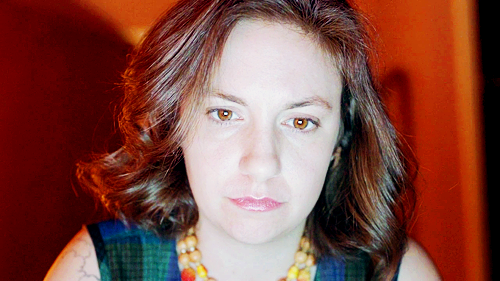
It is very rare that I sit
and watch television, but like so many of my peers and innumerable critics, I
love HBO’s Girls. Perhaps this is
because Girls does not feel like
television. Girls is about as close
as you can get to watching the real world without watching The Real World (which, arguably, is even less real than Girls). The series begins with
24-year-old Hannah Horvath being financially dumped by her parents, and the
rest is her shaky attempt at navigating professional and personal relationships
as a responsible young adult. Watching Hannah careen into near-disaster every
week has mounted my understanding that this is the offbeat girl next door
struggling with a lot more than trying to keep her shorteralls from riding up
in the middle.
It wasn’t until I read one
article on Slate in which the author praises Girls creator Lena Dunham for daring to feature such an “unlikeable protagonist,” as Hannah is, that something clicked. I had never considered
Hannah unlikeable –rude, awkward, inappropriate, selfish, immature, naïve – but
never flat out unlikeable. Now with the understanding that Hannah is not meant
to be liked (such as is the unintentional comic relief Shoshanna)—she joins the
ranks of brutishly candid Jessa and idealistic, coldblooded Marnie, and it
makes the series just that much better. It’s like now I have relinquished the
part of me that ignored the shiver down my spine when Hannah does something
like destroy a job interview with a date rape joke, or casually attack a
fling’s political beliefs in response to negative feedback about an essay she’d
written.
On a basic level, I have
identified with Hannah in many ways. She is a writer, feeling things for the
thrill of feeling them, going through life like some sort of self-appointed
journalist guinea pig, ready to share the well-written details of every awkward
tryst for even the possibility of some kind of artistic impact. She is a recent
college graduate that has felt the burn of the unpaid internship. She’s dabbled
in jobs she feels overqualified for, but still manages to somehow fuck them all
up. She’s engaged in unhealthy relationships, both sexual and platonic. She is
fucked up and often unwilling to acknowledge the ways in which she’s
responsible for her situations. She is everything I hate to admit I am.
Growing up, there were no
shows like Girls (and if there was,
would I have even been interested?). Instead, I watched shows like Friends. While each character on Friends is carefully crafted into a
“type” – Phoebe is quirky, Monica is anal, and Rachel is a recovering spoiled
brat – Girls accomplishes the same
while retaining realistic levels of flexibility, spontaneity, and complexity.
Hannah’s uncertainty about life can be read as quirky and at other times
flippant. She seems to quit jobs as a hobby, and has little concept of
professionalism. Her self-assured verbal declarations may have sincere
intentions but can come across nauseatingly privileged and solipsistic (“Maybe
you are the bad friend and I’m the good friend,” “My problem is that I’m too
kind, I’m too compassionate”). Hannah says the things we wouldn’t dare to, for
common respect to social decency: after writing about Marnie’s agonizing
relationship with Charlie in her notebook, which Charlie then read, leading to
the two’s breakup, Hannah asks: “But did you like it? Just as a piece of
writing.”
She is caustically cheeky about
the most sensitive of subjects: the root of a nasty divorce, a lover’s
political beliefs, a friend’s abortion. She is often a fool in her flings, like
sending a raunchy picture in response to a sext that Adam said was not intended
for her. She throws caution to the wind, including making blatantly bad
decisions with a Venti cup of confidence—procuring coke for a writing
assignment and having a titties-out romp with Elijah culminating in her
sleeping with the junkie downstairs; telling her boss that he can fuck her,
then attempting to extort and then threaten to sue him when he declines;
chasing down a stranger from the coffee shop and kissing him after confessing
she’s been throwing the shop’s garbage in his trash cans.
Hannah reminds me of
myself in the ways I don’t want to be reminded. Although we are the same age,
at 24, she resembles my 19-year-old self in philosophy and demeanor way more
than I am comfortable admitting.
She quotes Fiona Apple in
an episode, saying she just wants to feel everything –but in the process, she’s
numbing herself to feeling anything. When brief fling Sandy says he loves
hanging out with her, she goes on an annoying mini-rant about not wanting him
to use the word “love” at all. Hannah is not unlike George Costanza, a
character you love to be angry at, because she is simultaneously frustrating
and hilarious. Lena Dunham has done a wonderful job of creating a character
that speaks to parts of me I’d prefer to disown. I imagine it to be similar to
how someone secretly interested in murder would feel watching Dexter – so wrong, but so, so
right. Hannah Horvath represents the struggle between being an adventurous
woman with HPV and an e-book deal, and having the stable income to afford rent
each month. As she attempts to build the bridge that joins the two, we can join
along on her journey, laughing (and sometimes pointing), pretending that her
identity is less reflective of our own than it really is.
2.13.2013
The catfish gutted: Social media, virtual relationships and identity fraud

Catfish the TV show is a
half exposé, half humanitarian effort that feasts on the premise of physically uniting
people who have, until that point, kept their romance confined to the Internet.
In Catfish the documentary, Nev traveled to meet Megan, who he had been
carrying on a relationship with solely via Facebook, phone calls, and text
messages. Young, beautiful Megan proved to actually be a ruse identity for
not-so-young, not-as-beautiful Angela. It was revealed that Angela assumed many
online personas, utilizing Facebook sort of like The Sims. She gave life to
Megan by creating elaborate storylines and friends for her to interact with on
her Facebook wall. It was a complex web of lies that Nev found himself in, and
his obvious solution was to capitalize on this newly identified phenomenon of
“catfishing.”
According to UrbanDictionary, a catfish
is "someone who pretends to be someone they're not using Facebook or other
social media to create false identities." Nev claims to have created
Catfish the TV show as a way for people in this uniquely 21st century situation
to discover the truth—or perhaps, to shed their naïveté and move on to
relationships with physical, tangible, verifiable people. The series begs the question: Does anyone ever truly have
hope that his or her situation won’t have a result similar to Nev’s? Do these
guys really believe they are in an online relationship with a gorgeous model
that is too busy to meet up for one, two, or ten years, but strangely has no
evidence of any modeling gigs? Are they actively ignoring what is blatantly
fishy, or has the desperation for a connection rendered them oblivious to a
barrage of crimson red flags?
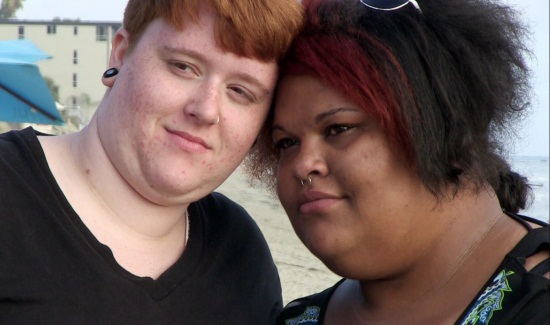 |
| "Alyx" and Kya, a rare Season One Catfish success story. |
The people who catfish
seem to have a few things in common – according to the show, at least. They are
confused about the space they occupy in the dating world, often struggling to
come to grips with difficult sexual preferences or self-confidence—or both.
Collin* has been
catfishing for about 10 years, since he was 14 – and has never seen either the
movie or the show.
“I started in ninth
grade,” he said. “My situation was that I [am] gay and was infatuated with a
lot of my [straight male] friends, and the only way I could get the type of
intimacy I wanted from them was to create this girl.”
Collin created a persona
who used the name Janice, using either unknown girls’ photos taken from the
Internet, or photos of one of his childhood friends. He contacted several dozen
of his classmates under the guise of Janice over a span of years, and even went
as far as speaking to and engaging in phone sex with some of them, changing his
voice.
“I did it purely out of
lust,” said Collin. “I would never go as far as to say ‘I love you’ or want a
relationship with them. This is completely separate from my love life.”
 |
| Catfish hoax victim Manti Te'o. |
“The Te’o thing is hard to
grasp,” Collin said. “How can you be in love with somebody and they think
you’re someone else? How do you process someone loving you, when it’s not you
that they love?”
The psychology behind
catfishing appears complex, but in a large part fueled by confusion and some
brand of self-doubt. This is an obvious observation, reiterated by the comment
most frequently spewed by catfishers upon first meeting their catfishee: “I was
scared to tell the truth, I thought you might stop talking to me.” For most
people, pixels will never adequately replace a person, so it is not farfetched
to surmise that this population of online-only daters has something to hide,
whether it be an element of their identity or their entire selves altogether.
The contemporary nature of social interaction allows for such
concealment—catfishing could not have been possible before the boom of the
Internet. On the other hand, growing online presence—more people on more
platforms—make it increasingly difficult to successfully carry out a catfishing
operation. Collin recalls being caught in his scheme when he was chatting with
someone who found the pictures he sent, online on its actual profile. On the TV
show, simple Google image searches often reveal that the pictures of the
supposed love interest actually belong to someone else. From that point forth,
it is at best naïve to believe that the rest of the story unfolds like a fairy
tale.
Collin believes that
online dating and communication in general can be very shady in nature, and
believes the fault lies in the person that willingly talks to a stranger and
raises no suspicion. For him, the best defense is common sense.
“I don’t know why you would continue talking to someone you’ve never seen, someone who always has an excuse for why they can’t chat with you on a webcam,” Collin said. “I personally don’t think I would ever fall for something like that.”
*Name has been changed.
1.07.2013
A beginner's quasi-Christian response to the Bible
"All living souls welcome whatever they are ready to cope with; all else they ignore, or pronounce to be monstrous and wrong, or deny to be possible."
I’ve never considered myself religious. I’ve managed to avoid actually reading the Bible for all of my 23 years, perhaps because I’ve been intimidated by the reputation that precedes it. It toted a sort of Pandora’s box-like quality that I simply sidestepped until a few weeks ago, when out of sheer curiosity an organic interest was born in me. In some way, religious or secular, personally or academically, I knew I would be a disadvantaged bibliophile if I continued to judge this revered book by its bland, monochromatic cover. So, like planet Earth, I started with Genesis.
While a 2011 Gallup survey reports that a whopping 30 per cent of U.S. adults interpret the Bible literally, I am siding with the majority. After all, subjugation of women, religious intolerance, incest, slavery, and capital punishment are all societal woes that are justified in the Bible. Just how seriously can we treat questionable biblical guidance while retaining practicality and sanity?
Certainly, God would not want us to kill two turtledoves every time we sinned. Are there even enough turtledoves alive to accommodate that? And surely God would not literally want us to cut off the hand that we’ve used to sin—we’d be a legion of amputees. We widely ignore specific counsel regarding premarital sex (1 Thessalonians 4:3-5), ejaculation (Genesis 38:9), divorce (Matthew 19:6), and finances (1 Corinthians 16:2). If some things in the Bible can be so casually and commonly overlooked, how can other things be so fiercely guarded and debated?
God said that it was an abomination for a man to lie with another man (Leviticus 20:13)—and this has spiraled into a culture of institutionalized homophobia. God told us to give 10 per cent of our income to the church (Leviticus 27:30)—and now we have churches with billboards and commercials, the pastor wearing a mic like Britney Spears’, and toting a salary that rivals hers. God told us to be fruitful and multiply (Genesis 9:7), and now we have blanketed the Earth with our presence, much to its detriment. Would it not be wise to treat all people as equals, tithe directly to charities and those we wish to help, and assign more focus towards cherishing and preserving the earth we have been multiplying upon?
Throughout my reading, one question plagued my mind worse than frogs or locusts: Why is it that we are so afraid to admit that we do not know something? We would rather create answers with gaping inconsistencies than to conclude we do not and cannot know, because to admit that is to introduce the possibility that nothing is real. Nothing exists the way we believe it does, so why should the truth, whatever that may be, mirror our hypotheses? Why should the reality of what will become of us be within the spectrum of our abilities to understand and comprehend life and death?
I don’t know if I became a journalist because I am skeptical, or if I am skeptical because I am a journalist. I constantly find myself questioning articles that I read from even the most “reputable” sources. My general skepticism has certainly prevented the progression of any personal relationship I might have with religion, or more specifically, Christianity. A compilation of tales written by ancient strangers, who certainly were much different than I in language, lifestyle, and frame of intelligence, won’t win my trust with just the shake of a shekel.
I do not believe circumcision is a prerequisite for holiness. I do not believe God “hates fags,” as religious picketers tend to boast. I do not believe the Israelites are the favored people of Earth. I find that unjust and unlike a God that is purported to love everyone equally. In fact, in 1999, Tel Aviv University archaeologist Ze’ev Herzog said in an article in the Ha’aretz newspaper that “the Israelites were never in Egypt, did not wander in the desert, did not conquer the land in a military campaign and did not pass it on to the 12 tribes of Israel.” Furthermore, Herzog asserts that “the united monarchy of David and Solomon, which is described by the Bible as a regional power, was at most a small tribal kingdom.”
Though Herzog’s statements remain controversial, they are a quintessential representation of the intent of biblical archaeology: to sift the true apart from the false. The basis for so much conflict that bleeds into the history we are today writing is mythical. As we forge battles on archaic beliefs, we curtail the opportunities for internal progression and ultimately, peace. Though we pick and choose biblical logic to support our moral standpoints, there will almost always be other biblical content to the contrary. Therefore, perhaps the situation is akin to lawyers arguing a complicated legal case. No one is wrong, no one is right, but the implications are widespread enough to affect us all. The challenge is utilizing the contents of the Bible as a tool and not a weapon.
No one can deny that there is more to life than we know. There is more to everything that we see, that we feel, that we shallowly surmise based on this book or that experience or this friend or that teacher. Our existence is entirely our own, and it only makes sense that many would feel motivated to invite in a higher power, a source of hope, a way to justify our existence as something more than a blip in the universe. I look out into the galaxy and feel compounded by the weight of all of which I do not know, which no one knows, and no one may ever know. You cannot convince someone to relinquish their faith, because to their faith they are indeed faithful. I just only hope for this faith to culminate in positive and progressive ways, and not revert to archaic ideologies of intolerance and hateful violence.
Everyone who believes anything that cannot be proven is doing so for their own reasons, all of which may differ from one another. Some believe to be protected, some believe because they have been bred into believers. Some believe because they genuinely believe, and others believe because they’ve never given a second thought to what it is they actually believe and why. The strongest argument I have heard for being a “person of faith” is that believing gives you nothing to lose and everything to gain, while disbelieving gives you everything to lose and nothing to gain.
However, I am more impressed with the contemplative than the assured, whether that’s assurance in theism or its opposite. Life is a journey with no finite answers, no technical guidebook to steer you—though I’m sure the Bible was the biggest and most successful attempt. The ability to have an open mind and genuinely consider the possibility of different truths and realities is paramount to progression as a person. It might not secure your admission into those pearly gates, if you believe a Heaven exists, but at least on Earth your aura will shine bright in a secular light.
- George Santayana
"You've gotta take this thing with a grain of salt, buddy, come on."
- Reverend Lovejoy on the bible, The Simpsons
I’ve never considered myself religious. I’ve managed to avoid actually reading the Bible for all of my 23 years, perhaps because I’ve been intimidated by the reputation that precedes it. It toted a sort of Pandora’s box-like quality that I simply sidestepped until a few weeks ago, when out of sheer curiosity an organic interest was born in me. In some way, religious or secular, personally or academically, I knew I would be a disadvantaged bibliophile if I continued to judge this revered book by its bland, monochromatic cover. So, like planet Earth, I started with Genesis.
While a 2011 Gallup survey reports that a whopping 30 per cent of U.S. adults interpret the Bible literally, I am siding with the majority. After all, subjugation of women, religious intolerance, incest, slavery, and capital punishment are all societal woes that are justified in the Bible. Just how seriously can we treat questionable biblical guidance while retaining practicality and sanity?
Certainly, God would not want us to kill two turtledoves every time we sinned. Are there even enough turtledoves alive to accommodate that? And surely God would not literally want us to cut off the hand that we’ve used to sin—we’d be a legion of amputees. We widely ignore specific counsel regarding premarital sex (1 Thessalonians 4:3-5), ejaculation (Genesis 38:9), divorce (Matthew 19:6), and finances (1 Corinthians 16:2). If some things in the Bible can be so casually and commonly overlooked, how can other things be so fiercely guarded and debated?
God said that it was an abomination for a man to lie with another man (Leviticus 20:13)—and this has spiraled into a culture of institutionalized homophobia. God told us to give 10 per cent of our income to the church (Leviticus 27:30)—and now we have churches with billboards and commercials, the pastor wearing a mic like Britney Spears’, and toting a salary that rivals hers. God told us to be fruitful and multiply (Genesis 9:7), and now we have blanketed the Earth with our presence, much to its detriment. Would it not be wise to treat all people as equals, tithe directly to charities and those we wish to help, and assign more focus towards cherishing and preserving the earth we have been multiplying upon?
Throughout my reading, one question plagued my mind worse than frogs or locusts: Why is it that we are so afraid to admit that we do not know something? We would rather create answers with gaping inconsistencies than to conclude we do not and cannot know, because to admit that is to introduce the possibility that nothing is real. Nothing exists the way we believe it does, so why should the truth, whatever that may be, mirror our hypotheses? Why should the reality of what will become of us be within the spectrum of our abilities to understand and comprehend life and death?
I don’t know if I became a journalist because I am skeptical, or if I am skeptical because I am a journalist. I constantly find myself questioning articles that I read from even the most “reputable” sources. My general skepticism has certainly prevented the progression of any personal relationship I might have with religion, or more specifically, Christianity. A compilation of tales written by ancient strangers, who certainly were much different than I in language, lifestyle, and frame of intelligence, won’t win my trust with just the shake of a shekel.
I do not believe circumcision is a prerequisite for holiness. I do not believe God “hates fags,” as religious picketers tend to boast. I do not believe the Israelites are the favored people of Earth. I find that unjust and unlike a God that is purported to love everyone equally. In fact, in 1999, Tel Aviv University archaeologist Ze’ev Herzog said in an article in the Ha’aretz newspaper that “the Israelites were never in Egypt, did not wander in the desert, did not conquer the land in a military campaign and did not pass it on to the 12 tribes of Israel.” Furthermore, Herzog asserts that “the united monarchy of David and Solomon, which is described by the Bible as a regional power, was at most a small tribal kingdom.”
Though Herzog’s statements remain controversial, they are a quintessential representation of the intent of biblical archaeology: to sift the true apart from the false. The basis for so much conflict that bleeds into the history we are today writing is mythical. As we forge battles on archaic beliefs, we curtail the opportunities for internal progression and ultimately, peace. Though we pick and choose biblical logic to support our moral standpoints, there will almost always be other biblical content to the contrary. Therefore, perhaps the situation is akin to lawyers arguing a complicated legal case. No one is wrong, no one is right, but the implications are widespread enough to affect us all. The challenge is utilizing the contents of the Bible as a tool and not a weapon.
No one can deny that there is more to life than we know. There is more to everything that we see, that we feel, that we shallowly surmise based on this book or that experience or this friend or that teacher. Our existence is entirely our own, and it only makes sense that many would feel motivated to invite in a higher power, a source of hope, a way to justify our existence as something more than a blip in the universe. I look out into the galaxy and feel compounded by the weight of all of which I do not know, which no one knows, and no one may ever know. You cannot convince someone to relinquish their faith, because to their faith they are indeed faithful. I just only hope for this faith to culminate in positive and progressive ways, and not revert to archaic ideologies of intolerance and hateful violence.
Everyone who believes anything that cannot be proven is doing so for their own reasons, all of which may differ from one another. Some believe to be protected, some believe because they have been bred into believers. Some believe because they genuinely believe, and others believe because they’ve never given a second thought to what it is they actually believe and why. The strongest argument I have heard for being a “person of faith” is that believing gives you nothing to lose and everything to gain, while disbelieving gives you everything to lose and nothing to gain.
However, I am more impressed with the contemplative than the assured, whether that’s assurance in theism or its opposite. Life is a journey with no finite answers, no technical guidebook to steer you—though I’m sure the Bible was the biggest and most successful attempt. The ability to have an open mind and genuinely consider the possibility of different truths and realities is paramount to progression as a person. It might not secure your admission into those pearly gates, if you believe a Heaven exists, but at least on Earth your aura will shine bright in a secular light.
12.01.2012
Domestic violence and the domino effect of decisions, especially if you're Rihanna
 |
| Police photo of Rihanna following the assault on Feb. 8, 2009. |
Nearly four years have passed since Brown was charged with assaulting Rihanna viciously in his car, and the two have gradually shed concern about hiding their persisting romantic connection. One visit to the Bajan singer’s Instagram reveals just how close they are, with the two entertainers’ private moments shared, ever so casually, with Rihanna’s nearly four million followers.
Unlike most domestic violence victims, Rihanna’s plight was witnessed by the world, as was her return to the partner who hit her. Rihanna is a high-profile reflection of innumerable women facing difficult decisions—except, unlike many other women, nothing is pinning her to Chris Brown aside from her own desire. Rihanna is not financially dependent on Brown, or any other person for that matter. They have no kids, and certainly no marriage. She’s gorgeous, talented, and wealthy. If she chooses to publicly embrace a person who once reduced her face to a series of gashes and welts essentially in front of the entire world, then to younger, more naïve, and less affluent people with fewer resources—what’s the occasional slap or shove?
What Rihanna is saying, quite effectively albeit unintentionally, is that despite boundless resources and unrelenting support, sometimes a person will still return to the arms of the one that’s hurt them. Or in Rihanna’s case, one that’s repeatedly and mercilessly punched them in the face, causing their mouth to fill with blood.
In an interview with Oprah Winfrey earlier this year, Rihanna explained how she strangely felt protective over Brown after he assaulted her. “He made that mistake because he needed help, but who’s going to help him?” the singer tearfully asked on the special that aired August 19. “I was hurt the most. Nobody felt what I felt.”
That solipsistic outlook is something that 23-year-old Vanessa*, who is just one year younger than Rihanna, was no stranger to. In 2009, at the time that the singer’s battered face became etched in society’s collective psyche, Vanessa had been dating Tim* for almost two years.
“He was very handsome and very sweet when I first met him,” said Vanessa, who was 17 at the time. He was 21. She was enraptured by his beautiful teeth and by the fact that he owned his own car. After they began dating, the sweetness soon dissipated into acts of rage and irrationality. About six months into their relationship, Tim found a photo of himself in Vanessa’s car and became furious. He accused her of wanting to put pictures of him on the Internet, something he was vehemently against—because he was maintaining other romantic relationships as well, Vanessa later found out.
“He balled the picture up, threw it in my face, then picked it back up and shoved it in my mouth,” Vanessa said. “I kind of overlooked [the incident] because I was afraid. It was just too weird.”
Tim was not apologetic, either. His response to the incident: “Don’t have pictures of me and it won’t happen again.”
Researchers from the Department of Sociology at the University of Iowa conducted a longitudinal study of domestic violence perpetrated by young men, examining male subjects originally in grades 7 through 12 and interviewing them about their sexual relationships seven years later. The study examined the correlation between having an affiliation with violent peers during adolescence and perpetration of domestic violence in early adulthood.
Results from the study showed that males with smaller circles of friends were less likely to be violent in relationships. Males with large groups of friends, 13 or more, were over five times likelier to be violent in relationships. This is because, according to the study’s researchers, large homogenous networks act as a primary context for social learning. The more friends a young man has, the likelier it is that one is violent, and as the old axiom goes: Monkey see, monkey do. The effects of the behavior we are surrounded by in our adolescence leave an ineradicable mark on us. The study concluded that school interventions targeted at male fighting could reduce risk of domestic violence perpetration.
So what about Chris Brown, whose adolescence was just a tad different from the average guy's? Thrust into the limelight at such a young age, perhaps he never really had the guidance or example he needed to establish a sane, calm demeanor. And Rihanna—the same can be said for her. Bad influences abound, and countless "friends" acting as socializing forces, is it a wonder the two experienced tumultuous times? Called “unhealthy” by a source close to Brown, their relationship is bad business to incalculable critics, likely including friends, family, and fans alike. If it was of any interest to either party, the two stand to gain much moral and ethic clout by disentangling their identities from one another.
Since separating from Tim, Vanessa has been able to take part in happier relationships. Her theory on why he occupied such an abusive identity: because he could.
“I think he was just very insecure,” Vanessa admits.
It is difficult to surmise whether insecurity always plays a factor in instances of domestic violence, but the one common denominator for domestic violence victims and perpetrators alike, according to Dr. Gleason? Everyone suffers.
Everyone suffers, and not everyone's suffering can be heard, recognized, and addressed. Rihanna has the power and the publicity to make a persuasive statement to the Vanessas that remain with their Tims, hoping fruitlessly that things will one day be better.
*Names have been changed.
What Rihanna is saying, quite effectively albeit unintentionally, is that despite boundless resources and unrelenting support, sometimes a person will still return to the arms of the one that’s hurt them. Or in Rihanna’s case, one that’s repeatedly and mercilessly punched them in the face, causing their mouth to fill with blood.
 |
| Rihanna in an interview with Oprah Winfrey. |
That solipsistic outlook is something that 23-year-old Vanessa*, who is just one year younger than Rihanna, was no stranger to. In 2009, at the time that the singer’s battered face became etched in society’s collective psyche, Vanessa had been dating Tim* for almost two years.
“He was very handsome and very sweet when I first met him,” said Vanessa, who was 17 at the time. He was 21. She was enraptured by his beautiful teeth and by the fact that he owned his own car. After they began dating, the sweetness soon dissipated into acts of rage and irrationality. About six months into their relationship, Tim found a photo of himself in Vanessa’s car and became furious. He accused her of wanting to put pictures of him on the Internet, something he was vehemently against—because he was maintaining other romantic relationships as well, Vanessa later found out.
“He balled the picture up, threw it in my face, then picked it back up and shoved it in my mouth,” Vanessa said. “I kind of overlooked [the incident] because I was afraid. It was just too weird.”
Tim was not apologetic, either. His response to the incident: “Don’t have pictures of me and it won’t happen again.”
Though she never snapped another photo of Tim, it did happen again, most severely on Valentine’s Day of 2010. “Snowpocalypse” was ravaging the East coast, and Tim’s car became stuck while parked outside of Vanessa’s house, which he adamantly blamed on her. He demanded that she get his car out, and after attempting to dig his car out of several inches of snow and ice for an hour, Vanessa gave up. When she returned inside, he accosted her in the kitchen and choked her. She ran upstairs to lock herself in her bedroom, but he pursued, and the situation was eventually “settled” with sex.
Vanessa also recalled a situation where she accidentally knocked a lollipop out of Tim’s mouth, and he immediately slapped her in the face. She says the physical aggression was few and far between, making it even harder to pinpoint the exact moment she’d let go and leave.
There was no breaking point, no one moment that pushed Vanessa over the edge. She gradually cut off all romantic ties with Tim on her own accord, simply deciding that his positive qualities, if any, were not enough to justify the ugly ones.
“I think there’s this attitude where you accept something because you think it’s how it’s supposed to be,” Vanessa said. The irony is that Vanessa still maintains a casual friendship with Tim, who shares similarly unsettling details of his new relationships with her. His despicable actions are never addressed, and his continuing to casually behave the same way is either a statement of obliviousness or complete disinterest.
As with Tim’s response to his aggression, Brown’s collective response to his assault of Rihanna, particularly to critics, has been one of flippancy and disrespect. The public apology he issued post-incident is hardly an indicator of his remorse, as his actions are speaking far louder.
Unsavory publicity seems to have become a staple of Brown’s career: angrily bashing windows at daytime talk shows, getting the face of a beaten woman tattooed on his neck, participating in bafflingly immature and sexist Twitter arguments. He is by most accounts uncouth, and, to borrow from Rihanna’s latest album, unapologetic. After Rihanna’s emotional interview with Oprah, Brown’s response in so many words: That’s old news, so stop crying about it.
Chris Brown does not present himself as a good person, and furthermore, shows no sign of a behavioral metamorphosis. Rihanna’s insistence on affiliating with him is damaging and dismissive, and makes a huge statement about how women are encouraged or expected to respond to domestic turbulence.
After all, Vanessa’s face never looked anything like Rihanna’s on the night of February 8.
Vanessa also recalled a situation where she accidentally knocked a lollipop out of Tim’s mouth, and he immediately slapped her in the face. She says the physical aggression was few and far between, making it even harder to pinpoint the exact moment she’d let go and leave.
There was no breaking point, no one moment that pushed Vanessa over the edge. She gradually cut off all romantic ties with Tim on her own accord, simply deciding that his positive qualities, if any, were not enough to justify the ugly ones.
“I think there’s this attitude where you accept something because you think it’s how it’s supposed to be,” Vanessa said. The irony is that Vanessa still maintains a casual friendship with Tim, who shares similarly unsettling details of his new relationships with her. His despicable actions are never addressed, and his continuing to casually behave the same way is either a statement of obliviousness or complete disinterest.
As with Tim’s response to his aggression, Brown’s collective response to his assault of Rihanna, particularly to critics, has been one of flippancy and disrespect. The public apology he issued post-incident is hardly an indicator of his remorse, as his actions are speaking far louder.
Unsavory publicity seems to have become a staple of Brown’s career: angrily bashing windows at daytime talk shows, getting the face of a beaten woman tattooed on his neck, participating in bafflingly immature and sexist Twitter arguments. He is by most accounts uncouth, and, to borrow from Rihanna’s latest album, unapologetic. After Rihanna’s emotional interview with Oprah, Brown’s response in so many words: That’s old news, so stop crying about it.
Chris Brown does not present himself as a good person, and furthermore, shows no sign of a behavioral metamorphosis. Rihanna’s insistence on affiliating with him is damaging and dismissive, and makes a huge statement about how women are encouraged or expected to respond to domestic turbulence.
After all, Vanessa’s face never looked anything like Rihanna’s on the night of February 8.
The physical, outward toll of the abuse Vanessa experienced over the course of a few years paled in comparison to Rihanna’s one brush with domestic violence, and it is strangely understandable how someone in her situation may choose to stick around despite red flags.
The men who are domestic violence perpetrators will likely always behave the same way, either because they do not know or choose not to know that it is a huge problem. Many of these men have cemented abusive behaviors as the norms in their lives, possibly having witnessed similar dynamics in their households as children.
To a great extent, behavior that we label “domestic violence” is learned behavior, according to Washington, D.C. based psychotherapist Dr. Patrick Gleason, PhD., who has had experience working with both victims and perpetrators of domestic violence.
 |
| Rihanna and Chris Brown photographed at a club in Sept. 2012. |
To a great extent, behavior that we label “domestic violence” is learned behavior, according to Washington, D.C. based psychotherapist Dr. Patrick Gleason, PhD., who has had experience working with both victims and perpetrators of domestic violence.
“People learn how to hurt one another,” he said. “It’s not that some people are born that way. We teach one another. Many of the clients I’ve worked with grew up in households where there was domestic violence and they witnessed it. [These kids] are the victims we often forget about.”
Some women will leave dangerous relationships, but others will stay. Rihanna, by choosing to ultimately stay, has set a complicated standard for young, impressionable fans in relationships like Vanessa’s.
Of course, by the same logic of learned behavior, healthy relationship behaviors can be learned as well, attaching a precarious level of importance to setting positive examples for adolescent observers. Peer influence also seizes a slice of responsibility, as shown in a study published in the Journal of Adolescent Health in February.
Some women will leave dangerous relationships, but others will stay. Rihanna, by choosing to ultimately stay, has set a complicated standard for young, impressionable fans in relationships like Vanessa’s.
Of course, by the same logic of learned behavior, healthy relationship behaviors can be learned as well, attaching a precarious level of importance to setting positive examples for adolescent observers. Peer influence also seizes a slice of responsibility, as shown in a study published in the Journal of Adolescent Health in February.
Researchers from the Department of Sociology at the University of Iowa conducted a longitudinal study of domestic violence perpetrated by young men, examining male subjects originally in grades 7 through 12 and interviewing them about their sexual relationships seven years later. The study examined the correlation between having an affiliation with violent peers during adolescence and perpetration of domestic violence in early adulthood.
Results from the study showed that males with smaller circles of friends were less likely to be violent in relationships. Males with large groups of friends, 13 or more, were over five times likelier to be violent in relationships. This is because, according to the study’s researchers, large homogenous networks act as a primary context for social learning. The more friends a young man has, the likelier it is that one is violent, and as the old axiom goes: Monkey see, monkey do. The effects of the behavior we are surrounded by in our adolescence leave an ineradicable mark on us. The study concluded that school interventions targeted at male fighting could reduce risk of domestic violence perpetration.
So what about Chris Brown, whose adolescence was just a tad different from the average guy's? Thrust into the limelight at such a young age, perhaps he never really had the guidance or example he needed to establish a sane, calm demeanor. And Rihanna—the same can be said for her. Bad influences abound, and countless "friends" acting as socializing forces, is it a wonder the two experienced tumultuous times? Called “unhealthy” by a source close to Brown, their relationship is bad business to incalculable critics, likely including friends, family, and fans alike. If it was of any interest to either party, the two stand to gain much moral and ethic clout by disentangling their identities from one another.
Since separating from Tim, Vanessa has been able to take part in happier relationships. Her theory on why he occupied such an abusive identity: because he could.
“I think he was just very insecure,” Vanessa admits.
It is difficult to surmise whether insecurity always plays a factor in instances of domestic violence, but the one common denominator for domestic violence victims and perpetrators alike, according to Dr. Gleason? Everyone suffers.
Everyone suffers, and not everyone's suffering can be heard, recognized, and addressed. Rihanna has the power and the publicity to make a persuasive statement to the Vanessas that remain with their Tims, hoping fruitlessly that things will one day be better.
*Names have been changed.
Subscribe to:
Posts (Atom)